The Backend Stack That Powers Production-Grade Systems

The Backend Stack That Powers Production-Grade Systems

A founder's perspective on choosing technology that scales from prototype to millions of users, backed by real-world case studies. Discover the proven tech stack: FastAPI, PostgreSQL, Redis, and Celery.

Kaushal Khokhar
Kaushal Khokhar20 Dec, 2025 · 6 min read

Introduction

We build powerful features at PYTACT Solutions with an AI driven development process. You can review our case study where I explained the challenges, resolutions and result metrics to highlight the difference in outcome. This was one of the amazing achievements as a software development expert.

The most crucial component of software application is backend architecture design and tech stack. The whole foundation relies on what technical stacks we opt for and how we wired them so that system becomes scalable from the beginning itself.

This is not a joke. With the advancement of AI, lots of beginners started developing applications but the real question is — "how many of them have potential to ship it to production."

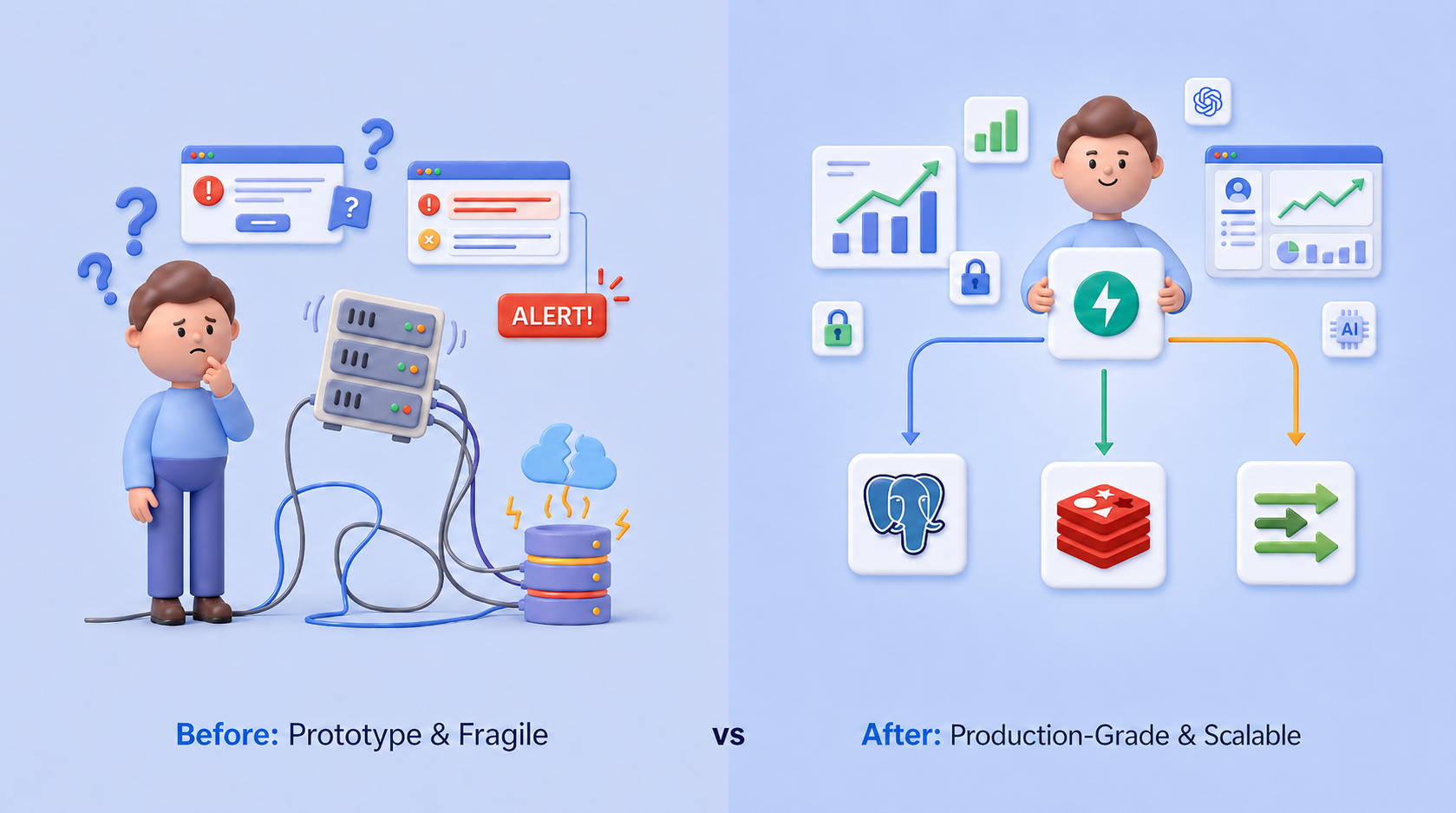
Our Production-Ready Technology Army

This technology army is capable of handling tons of requests without impacting performance. We have a consistent decision in choosing these stacks unless the customer has strict selection criteria.

FastAPI

REST API service

PostgreSQL

Primary Database

Redis

Cache & message broker

Celery

Background execution

Real-World Systems as Proof

Fraud Detection Case Study: Sweet Spot Data

tva-fetch: Amazon Seller Data Infrastructure

Why This Stack Covers 90% of Requirements

The consistent stack doesn't mean we are not conscious about the other options. In fact we have proven records to build software using them as well:

  • Django and Flask as backend services
  • MongoDB as NoSQL database
  • Vector Databases such as Qdrant

But the stack which I highlighted here is capable enough to manage 90% of requirements.

The reason we believe in these packages is most of the time over-engineering kills the real product features and we end up wasting so much time and efforts in deciding only development stacks. On the contrary, which is never needed until the product proves the capability of solving the end user problem. Even though architecture should be solid enough to be extendible gracefully without doing re-engineering. That is why the provided stacks keep the perfect balance between ready to use and extensibility.

Share :