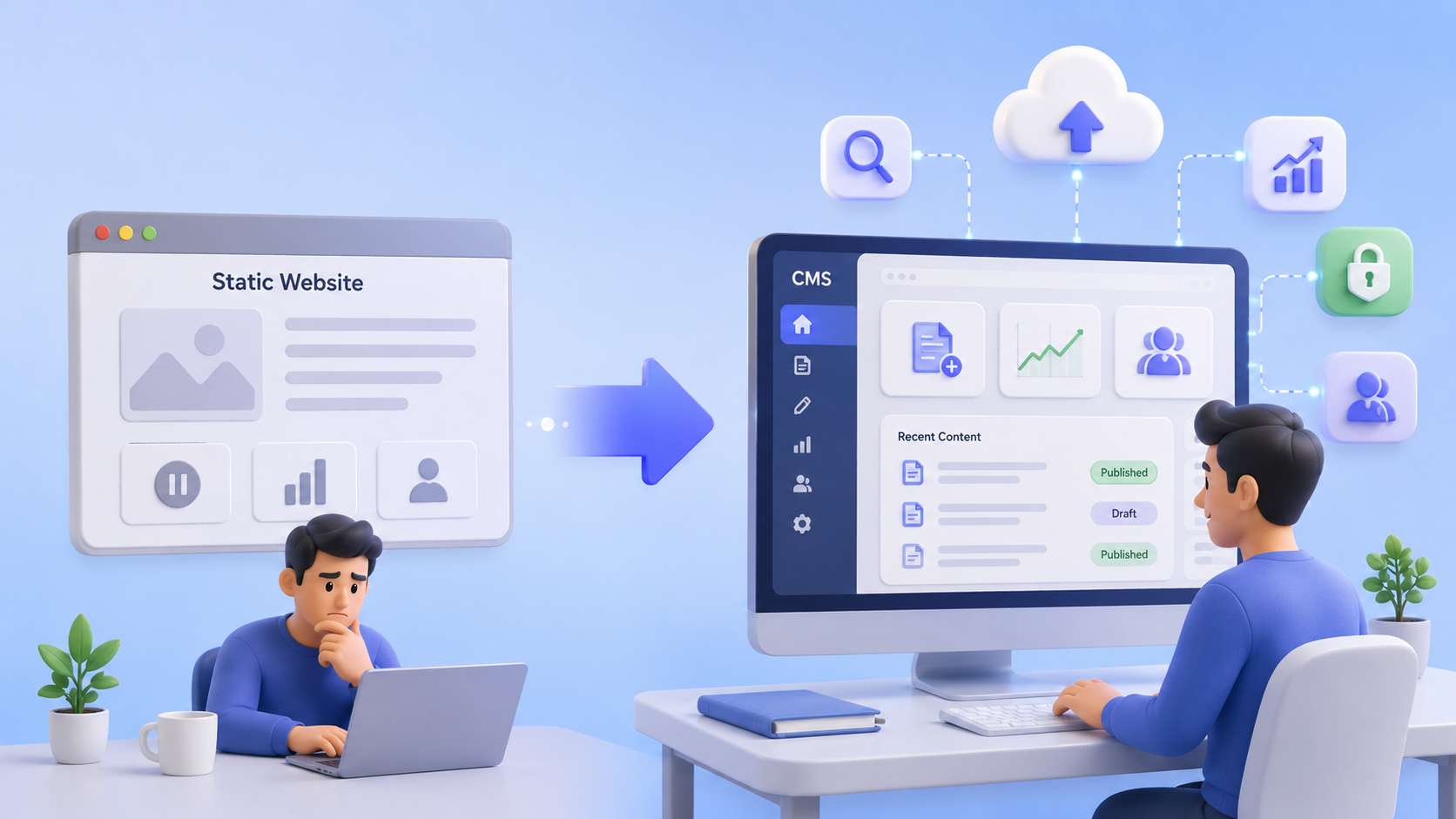
CMS vs Static Website and What Growing Service Businesses Should Choose
Learn what growing service businesses should know before choosing CMS or static website

The Hidden Problem Behind “Simple Websites”
Many service businesses start with a simple goal: get a website live.
A static website does that job well. It is fast, cost-effective, and gives your business an online presence. But over time, something starts to feel off.
The website is live, but:
- traffic is not increasing
- content is not evolving
- leads are not coming consistently
The problem is not that you do not have a website. The problem is that your website is not built to grow.
What Is a Static Website (And Why Businesses Choose It)
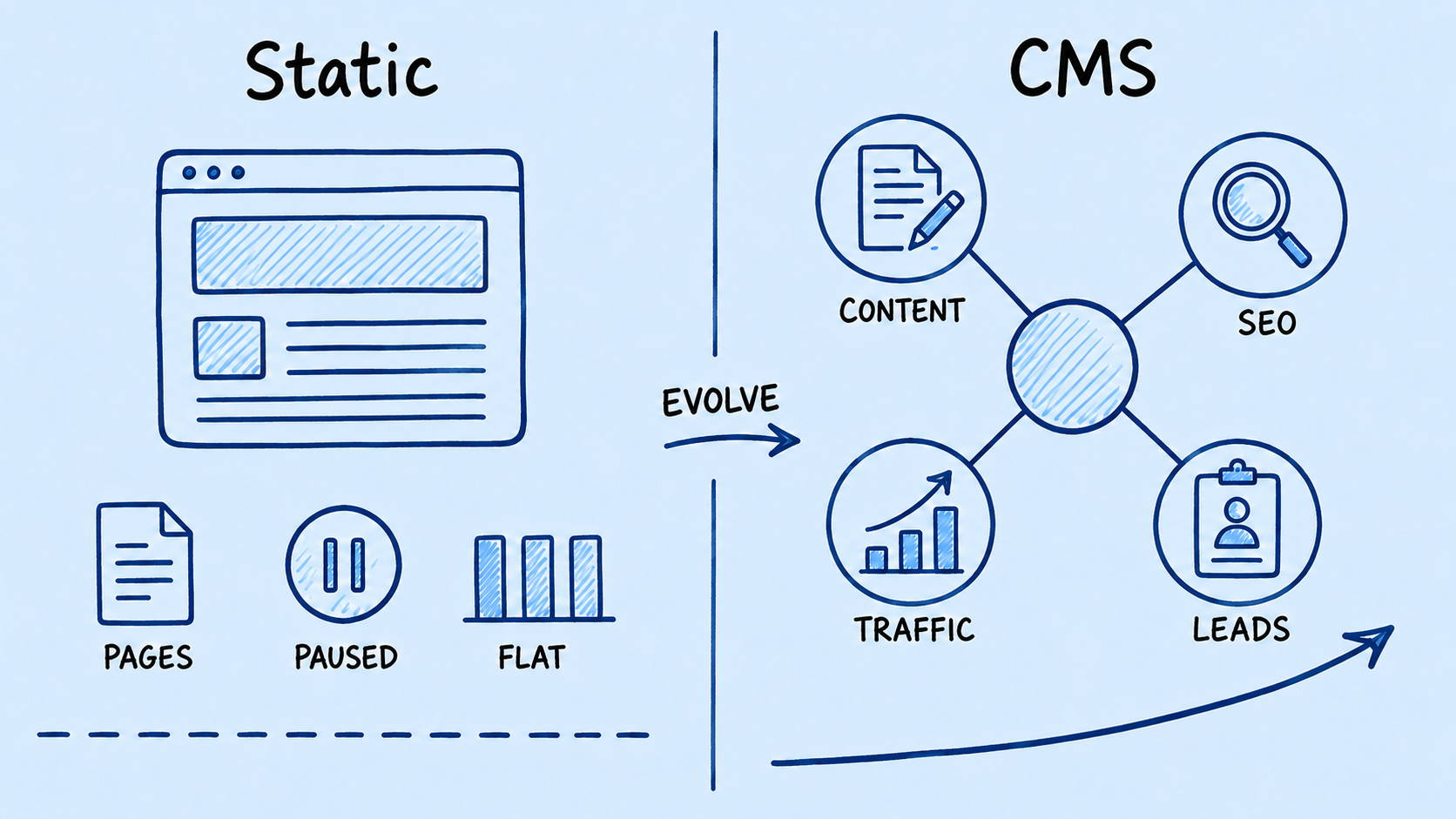
A static website is built using fixed content. Each page is created manually and served exactly as it is.
There is no system behind it to manage updates dynamically.
Businesses choose static websites because:
- they are simple to build
- they load fast
- they are cost-effective
- they work well for basic presence
This makes them ideal for:
- portfolio websites
- small service businesses
- brochure-style websites
Where Static Websites Start Breaking Down
As your business grows, your website needs change.
You may want to:
- update services
- publish blogs
- improve SEO
- run marketing campaigns
This is where static websites start creating friction.
- every change requires developer support
- content updates are slow
- SEO does not improve without new content
- there is no structured way to scale pages
- tracking leads becomes difficult
Over time, the website becomes a bottleneck instead of an asset.
What Is a CMS (In Simple Terms)
A CMS (Content Management System) allows you to manage your website content without relying on developers for every change.
Instead of manually updating pages, you can:
- create content
- edit content
- publish updates
- manage structure
All from a single system.
A CMS shifts your website from being static to being manageable and scalable.
How CMS Changes the Way Websites Perform
The biggest difference is not technical. It is how your website behaves over time.
With a CMS:
- content becomes continuous, not fixed
- SEO improves with regular updates
- pages can be optimized consistently
- the website evolves with your business
Instead of a one-time setup, your website becomes an ongoing system.
Real Scenario — Static Website vs CMS in Practice
Consider a typical service business.
In the beginning:
- they launch a static website
- services are listed
- basic information is available
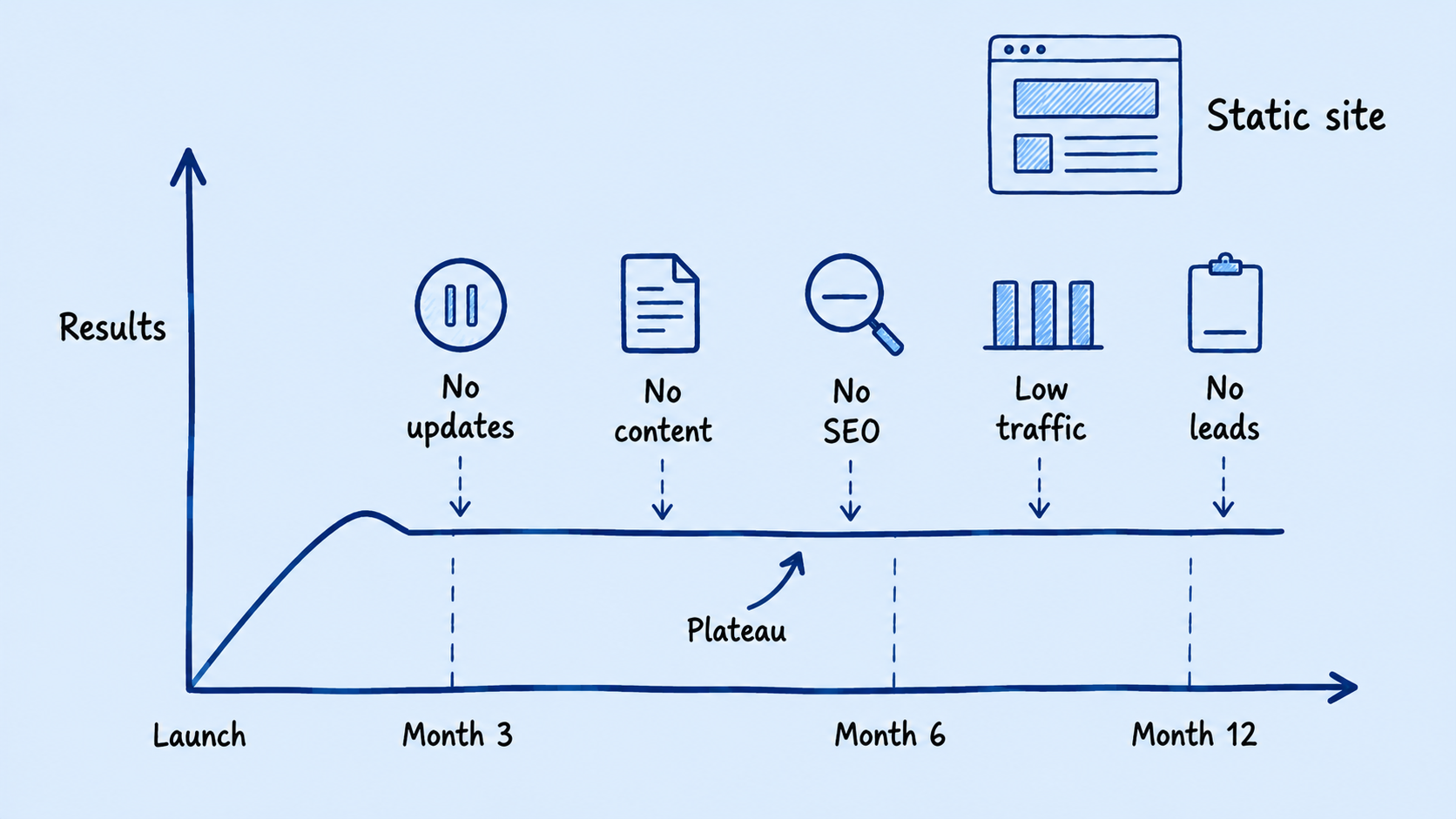
After a few months:
- no new content is added
- rankings do not improve
- traffic remains low
Now compare this with a CMS-based approach.
After moving to a CMS:
- blogs are published regularly
- pages are optimized
- SEO visibility improves
- leads start coming through the website
The difference is not just the platform. It is the ability to update, improve, and grow.
Key Differences That Actually Matter for Business
When a Static Website Is Still a Good Choice
A static website is not always a bad choice.
It works well when:
- you need a simple online presence
- your content does not change frequently
- you are not focused on SEO
- you do not need lead tracking
For early-stage or small websites, this can be enough.
When a CMS Becomes Necessary
As soon as your website becomes part of your growth strategy, requirements change.
A CMS becomes important when:
- you want to improve search visibility
- you plan to publish content regularly
- you want to generate leads from your website
- your services and pages keep evolving
At this stage, a static setup starts holding you back.
Why Most Growing Service Businesses Eventually Switch
Many businesses do not start with a CMS.
They start simple.
But growth introduces new needs:
- regular updates
- marketing campaigns
- SEO improvements
- scaling services
Static websites are not built for this.
That is why many businesses eventually move to a CMS.
What Most Blogs Don’t Tell You
Most comparisons focus on definitions.
But the real difference is not static vs CMS.
It is:
A fixed website vs a growth system.
Static websites are not wrong. They are just limited when your business starts growing.
A CMS is not just a content tool. It is a system that supports:
- consistent updates
- structured SEO
- measurable growth
Conclusion — It’s Not About Website Type, It’s About Growth
Choosing between a CMS and a static website is not about technology.
It is about what you expect your website to do.
- If you only need presence, static works
- If you need growth, you need a system
The right choice depends on where your business is today and where you want it to go.
Next Step
Take a moment to evaluate your current website.
- Is it helping you grow?
- Is it easy to update?
- Is it generating leads?
If not, it may be time to rethink your approach.
Featured Posts
Best CMS for Small Business Websites in 2026
Find the best CMS for small business websites in 2026. Compare what matters for SEO, content, lead generation, and scalability so you can choose a platform that supports real growth, not just publishing.

CMS vs Website Builder and Which Is Better for Business Growth?
Compare CMS vs website builder options to see which is better for business growth, SEO performance, content scalability, and lead generation.
Best CMS for Lead Generation and What Small Businesses Should Look For
Learn how to choose the best CMS for lead generation. Understand SEO impact, content scalability, and how to select the right CMS for small business growth.