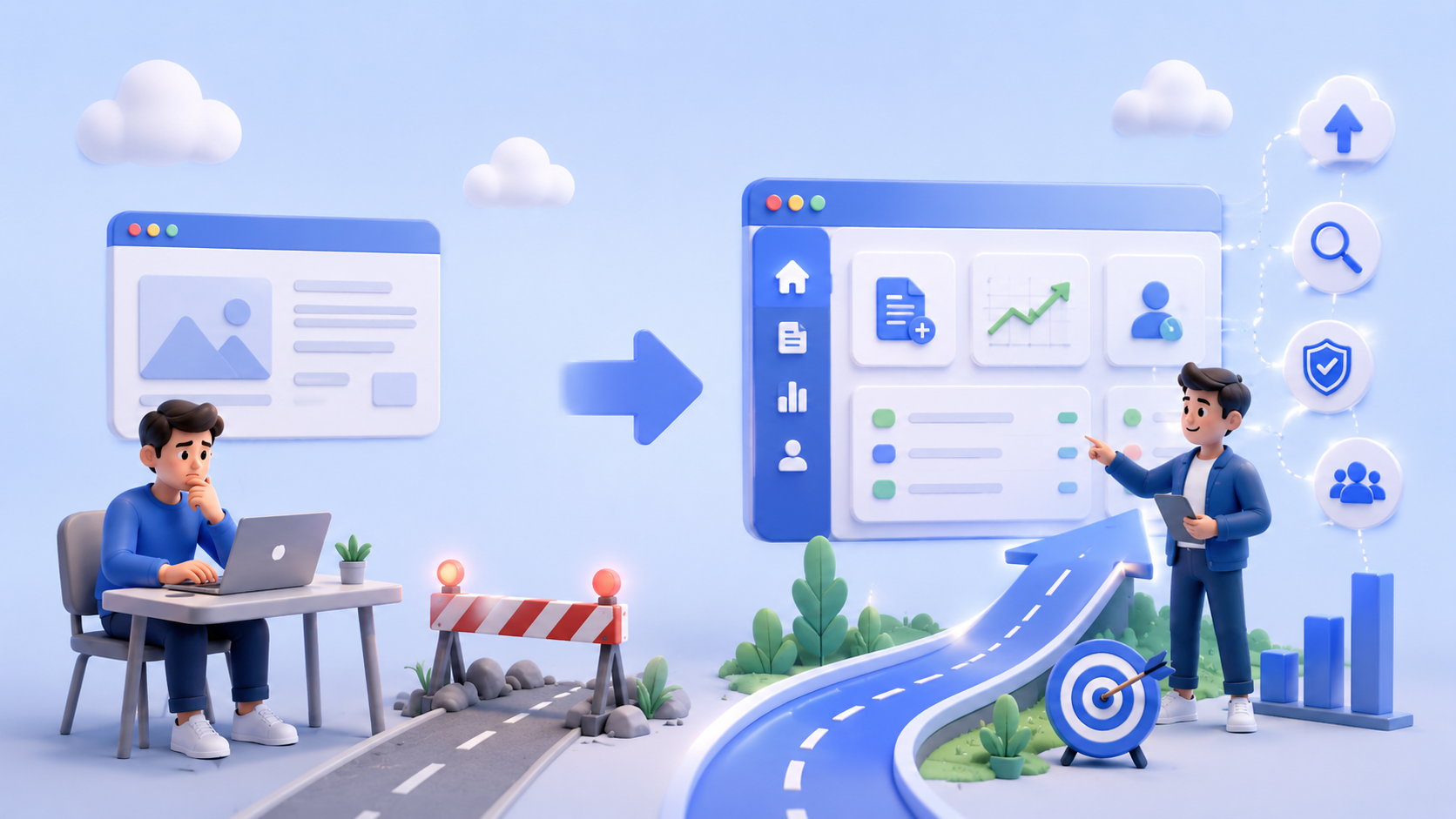
CMS vs Website Builder and Which Is Better for Business Growth?
A practical guide to choosing the right system based on growth, SEO, and lead generation

Introduction
Many businesses build websites, but struggle to turn them into a consistent source of traffic and leads.
The common approach is to choose a platform based on ease of use, cost, or popularity. Website builders feel simple and quick. CMS platforms feel more flexible. But this comparison often misses the real question.
The decision is not just about how your website looks or how fast you can launch it. It is about how your website performs as your business grows.
Your website is not just a collection of pages. It is part of your growth system.
SEO brings traffic.
Content builds trust.
Structure drives engagement.
And all of this leads to conversions and revenue.
The platform you choose directly affects each step of this process.
This is where the CMS vs website builder decision becomes important.
In this guide, you will understand the practical difference between both options, where each one works best, and how to choose the right system based on your business goals.
The goal is not to choose the most popular tool, but to choose the system that supports your long-term growth.
CMS vs Website Builder: What’s the Difference
fore deciding which option is better for your business, it is important to understand the core difference between a CMS and a website builder.
A website builder is designed for simplicity. It helps you create pages quickly using templates and drag-and-drop tools.
A CMS is designed for flexibility and control. It helps you build a system that can grow with your business.
The difference is not just in features. It is in how each approach works.
A website builder helps you create pages.
A CMS helps you build a system.
Quick Comparison
If your goal is to launch quickly, a website builder can be a practical option.
If your goal is to build a system that supports SEO, content, and lead generation, a CMS becomes more relevant.
This distinction becomes critical when your website starts playing a role in business growth.
Why This Decision Matters for Business Growth
A website is often judged by how it looks. But for a business, what matters more is how it performs.
A good design may create a strong first impression, but long-term growth depends on how well your website attracts visitors, engages them, and converts them into leads.
This process can be understood through a simple flow:
SEO → Traffic → Engagement → Leads → Revenue
Each stage depends on how your website is structured and managed.
Search engines need clear structure and control to rank your pages. Content needs to be created and updated consistently to build trust. Users need a smooth experience and clear direction to take action.
Your website platform directly affects all of this.
A CMS gives you more control over how your content is structured, how your pages are optimized for search, and how your website evolves as your business grows.
A website builder makes it easier to get started, but it may limit how deeply you can optimize your site, scale your content, or track user behavior over time.
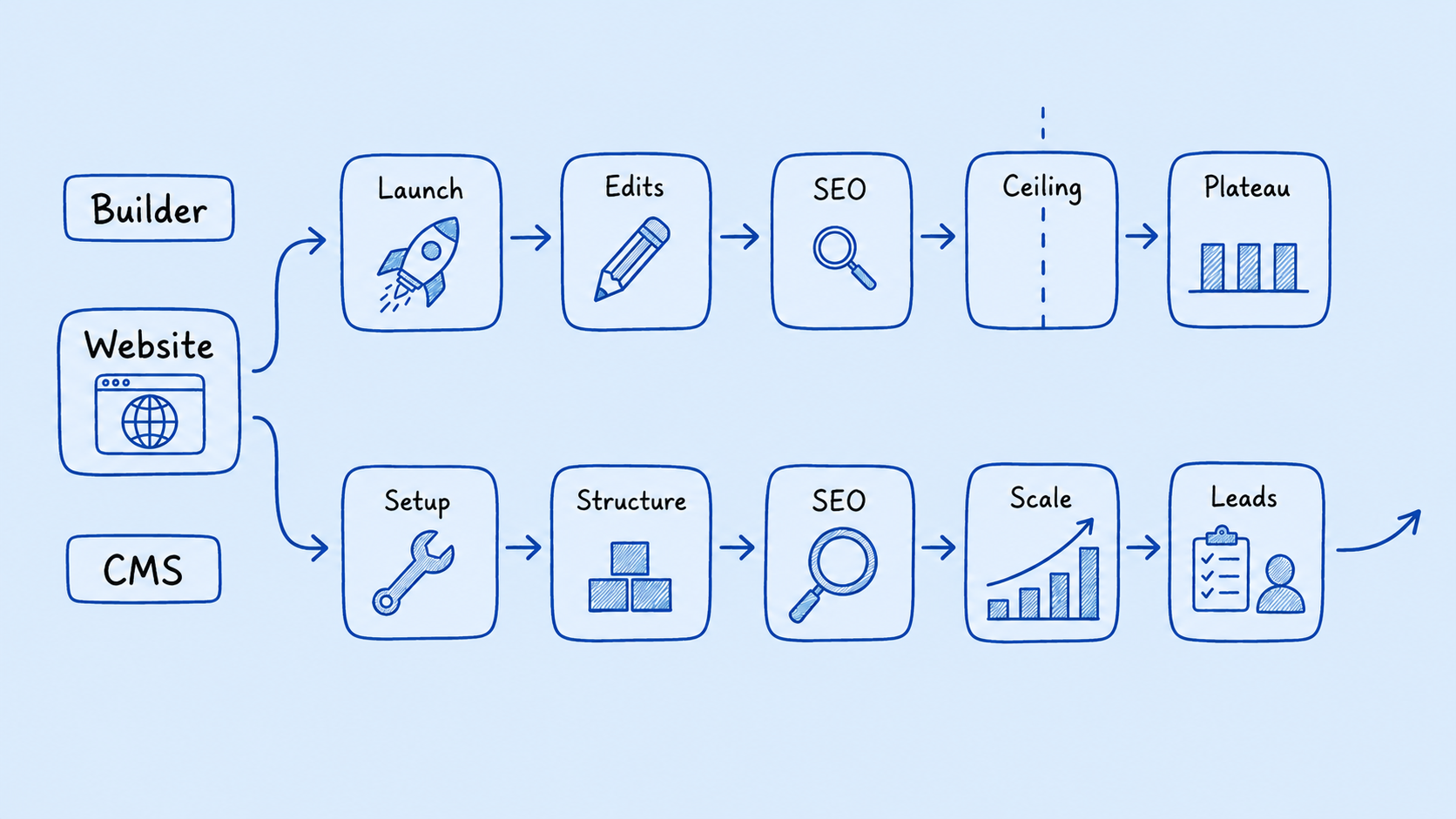
A website platform does not generate leads directly. But it controls every step that leads to them.
This is why choosing between a CMS and a website builder is not just a technical decision. It is a business decision that impacts your long-term growth.
Where Website Builders Work Best
Website builders are not a wrong choice. In many cases, they are a practical starting point for businesses that want to get online quickly.
They are designed for simplicity and speed, making them a good fit for specific use cases.
When Website Builders Make Sense
Website builders work best when your goal is to launch a simple website without much complexity.
They are suitable for:
- businesses that need a quick online presence
- small websites with limited pages
- portfolios or basic service websites
- teams without technical support
Key Advantages
Website builders simplify the entire process of creating and managing a website.
- easy setup with ready-made templates
- drag-and-drop interface for quick page creation
- no need to manage hosting, security, or updates
- all-in-one system with minimal setup
These benefits make them accessible for beginners and useful for early-stage businesses.
Where Limitations Start to Appear
As your business grows, your website requirements also change. This is where website builders may start to feel restrictive.
- limited control over SEO structure
- difficulty scaling content and pages
- restricted customization options
- limited flexibility in tracking and integrations
Website builders are optimized for simplicity, not long-term flexibility.
If your goal is to create a basic website and get started quickly, a website builder can be a good choice.
However, if your website is expected to support content, SEO, and lead generation over time, these limitations become more important.
Where CMS Works Better
As your business grows, your website needs more than just a simple setup. It needs a system that can support ongoing content, better visibility, and consistent lead generation.
This is where a CMS becomes more relevant.
When a CMS Makes Sense
A CMS is a better fit when your website plays an active role in your growth strategy.
It works well for:
- businesses focused on SEO and organic traffic
- better control over SEO elements like URLs, metadata, and site structure
- ability to manage large volumes of content efficiently
- freedom to customize features and workflows
This level of control allows your website to evolve as your business grows.
How CMS Supports Growth
A CMS aligns well with the growth process of a website.
- it helps create optimized pages that improve search visibility
- it supports consistent content publishing, which builds trust and engagement
- it allows better integration of forms and calls to action for lead generation
This makes it easier to move from traffic to conversions in a structured way.
Things to Consider
A CMS requires more effort compared to a website builder.
- initial setup may take more time
- there may be a learning curve
- ongoing maintenance and updates are required
However, this investment often supports better long-term results.
A CMS is not just a tool to manage content. It is a system designed to support growth, flexibility, and long-term scalability.
Real Business Scenario: From Website to Growth System
Many businesses start with a website builder because it is fast and easy. The website looks good, goes live quickly, and creates a strong first impression.
But after a few months, a common pattern starts to appear.
Before
The website exists, but results are limited.
- traffic is low or inconsistent
- pages are not ranking well in search
- content is not updated regularly
- no clear system to capture leads
- no visibility into where users are coming from
Even when marketing efforts are made, it becomes difficult to measure performance or improve results.
The website remains a static presence instead of becoming a growth channel.
The Shift
As the need for growth increases, the limitations become more visible.
The business moves to a CMS to gain more control and structure.
- content is organized and published consistently
- SEO elements like metadata and URLs are properly managed
- pages are structured for better visibility and user experience
- lead capture elements such as forms and calls to action are integrated
- tracking systems are set up to understand user behavior
After
With a structured system in place, the website starts performing differently.
- improved search visibility
- consistent content updates
- better user engagement
- clear tracking of traffic sources and campaigns
- steady flow of leads
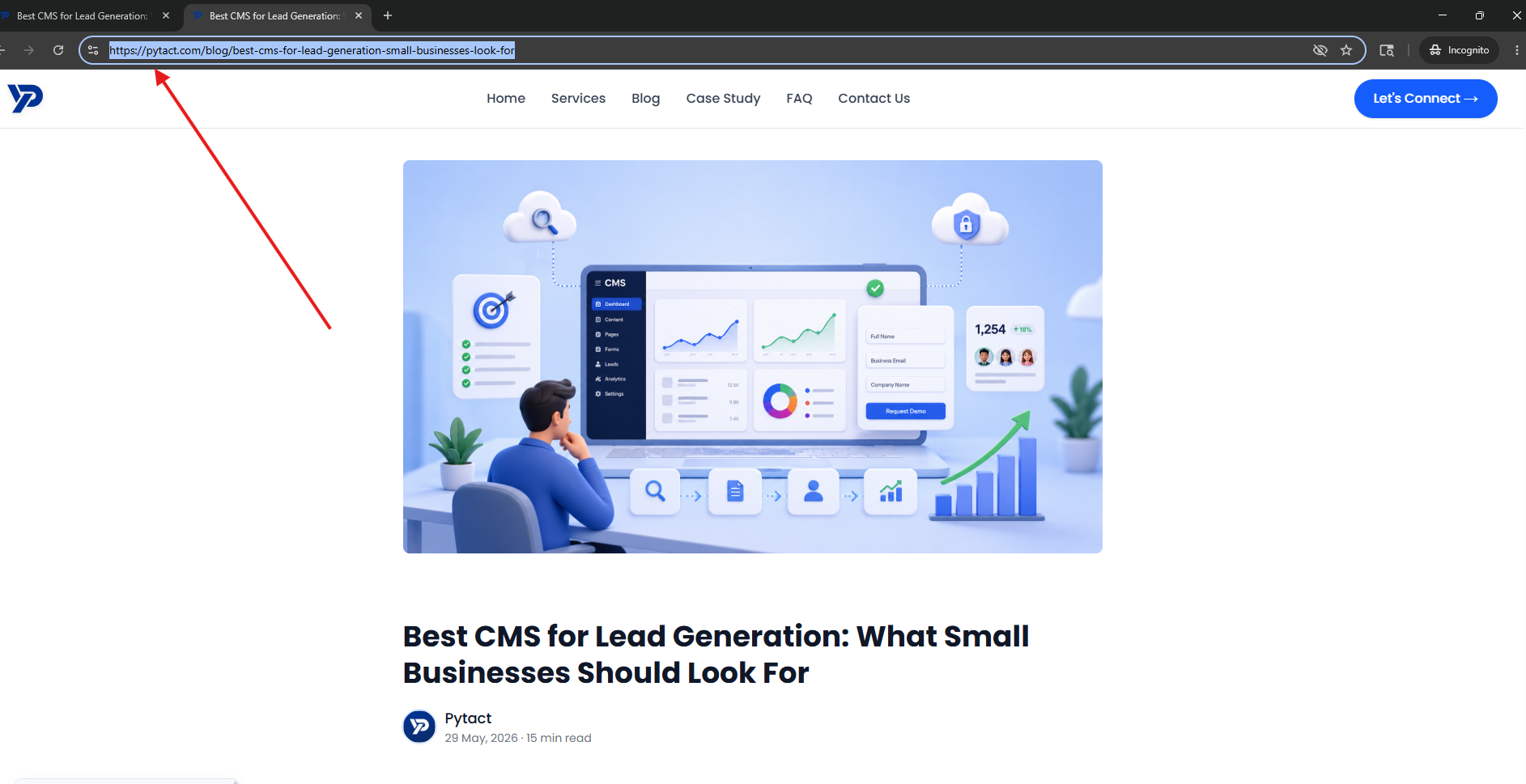
Result
The website shifts from being a collection of pages to becoming a system that supports business growth.
The difference is not just the platform. It is the structure, control, and clarity that the system provides.
This is where the CMS vs website builder decision becomes more than a technical choice. It becomes a strategic decision that defines how your website contributes to growth.
The Hidden Cost of Choosing the Wrong Platform
Choosing a website platform may seem like a one-time decision. But in reality, it affects how your website performs over time.
In the beginning, most platforms feel similar. You can launch quickly, create pages, and get your website live. The real differences start to appear as your business grows.
Rebuild and Migration Challenges
One of the most common issues is the need to rebuild the website.
As requirements increase, the existing platform may not support new features, better SEO structure, or advanced integrations. This often leads to a complete migration.
- rebuilding pages and content
- redesigning the website
- moving data from one system to another
This process takes time, effort, and resources.
Loss of Data and SEO Value
Switching platforms can also impact your existing performance.
- loss of search rankings due to URL changes
- broken links and indexing issues
- incomplete data migration
Even small changes can affect how your website performs in search results.
Operational Complexity
As your website grows, you may need additional tools to manage different functions.
- reliance on multiple plugins or third-party tools
- difficulty connecting systems like CRM and analytics
- manual workflows for content and tracking
This increases complexity and reduces efficiency.
Growth Limitations
The biggest impact is often on growth.
- limited control over SEO and structure
- difficulty scaling content
- lack of clear tracking for campaigns and leads
These limitations make it harder to improve performance over time.
The biggest cost of choosing the wrong platform is not just the time or money spent on rebuilding. It is the growth opportunities that are missed along the way.
Making the right choice early helps you avoid these challenges and build a stronger foundation for long-term results.
How to Choose the Right Option for Your Business
There is no single solution that works for every business. The right choice depends on your goals, your current stage, and how you plan to grow.
The key is to choose a system that aligns with your business direction, not just your immediate needs.
If Your Goal Is a Quick Launch
A website builder is a practical choice when:
- you need to get online quickly
- your website is simple with limited pages
- you do not plan to scale content heavily
- you do not require advanced SEO or tracking
This works well for early-stage or basic websites.
If Your Goal Is Long-Term Growth
A CMS is a better fit when:
- you want to improve SEO and organic visibility
- you plan to publish content regularly
- your website needs to generate leads
- you expect your website to grow over time
This approach supports a more structured and scalable system.
If You Want a More Structured Growth Approach
A modern content system can be considered when:
- you want to manage content, SEO, and tracking in one place
- you want to reduce dependency on multiple tools
- you need a clear workflow for publishing and optimization
This approach focuses on building a system rather than managing separate parts.
The best choice is not the simplest option. It is the one that aligns with how you want your website to perform as your business grows.
A Modern Approach: Moving Beyond Builders and Traditional CMS
As businesses grow, a common gap starts to appear.
Website builders are easy to use, but they can become limiting.
Traditional CMS platforms are powerful, but they often require more setup, maintenance, and coordination between tools.
This creates a challenge for many teams.
They need simplicity, but they also need structure and control.
The Shift Toward Content Systems
To address this gap, a more modern approach is emerging. Instead of treating content, SEO, and tracking as separate functions, they are managed as part of a single system.
This approach focuses on building a connected workflow where:
- content is structured and easy to manage
- SEO elements are integrated into the publishing process
- tracking is built into how pages and campaigns are created
The goal is not just to publish content, but to manage how that content performs.
Why This Approach Matters
Managing multiple tools for content, SEO, and analytics often creates friction.
- content updates become slow
- tracking becomes inconsistent
- data is spread across systems
A more integrated system reduces this complexity.
- fewer tools to manage
- clearer workflows for teams
- better visibility into performance
Quick Checklist Before You Decide
Before choosing between a CMS and a website builder, take a moment to evaluate your needs.
Ask yourself:
- Do you want to improve your search visibility and attract organic traffic?
- Do you plan to publish content regularly?
- Do you need your website to generate leads consistently?
- Do you want clear tracking of user behavior and campaign performance?
- Do you expect your website to grow in terms of content and features?
If most of your answers are yes, your website needs more than just a simple setup. It needs a system that can support long-term growth.
If your answers are mostly no, a simpler approach may still work for your current stage.
This checklist helps you align your decision with your business goals, rather than choosing based on convenience alone.
FAQ
Which is better for SEO: CMS or website builder?
A CMS generally offers more control over SEO elements like URLs, metadata, and site structure. Website builders provide basic SEO features, which may be sufficient for simple websites but can be limiting for long-term growth.
Which option is better for small businesses?
It depends on your goals. A website builder works well for simple websites and quick launches. A CMS is better if you want to grow through content, SEO, and lead generation.
Do I need a developer to use a CMS?
Not always. Many CMS platforms are user-friendly, but some level of technical support may be required for setup, customization, or advanced features.
Can I switch from a website builder to a CMS later?
Yes, but it can be time-consuming. Migration may involve rebuilding pages, moving content, and handling SEO changes, which can impact performance if not managed properly.
Which is better for lead generation?
A CMS is generally more suitable for lead generation because it allows better control over content, forms, and tracking systems.
Is a website builder enough for long-term growth?
It can work in the early stages, but as your business grows, limitations in SEO, scalability, and customization may become more noticeable.
These answers cover common concerns and help you make a more informed decision based on your business needs.
Next Steps
Choosing between a CMS and a website builder is not just a technical decision. It is a decision that shapes how your website supports your business over time.
Before making a choice, take a moment to evaluate your current setup. Identify what is working, where the limitations are, and how your website fits into your growth strategy.
Use the checklist in this guide to assess whether your current platform supports SEO, content, lead generation, and tracking.
In many cases, getting a second perspective can also help you make a more confident decision, especially when your website plays a key role in your business.
The right system does not just help you build a website. It helps you build a foundation for consistent and measurable growth.
Featured Posts
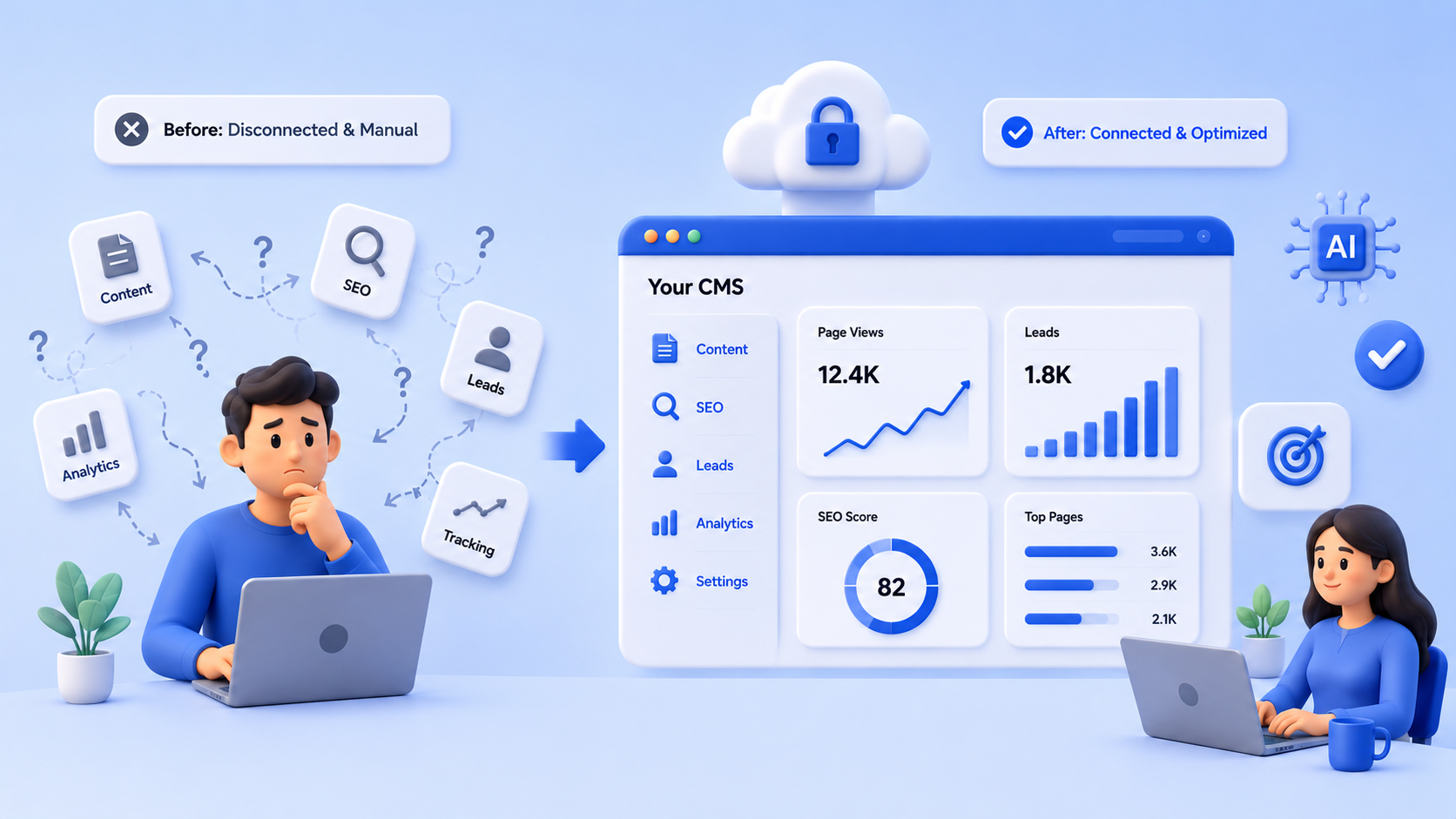
Best CMS for Small Business Websites in 2026
Find the best CMS for small business websites in 2026. Compare what matters for SEO, content, lead generation, and scalability so you can choose a platform that supports real growth, not just publishing.
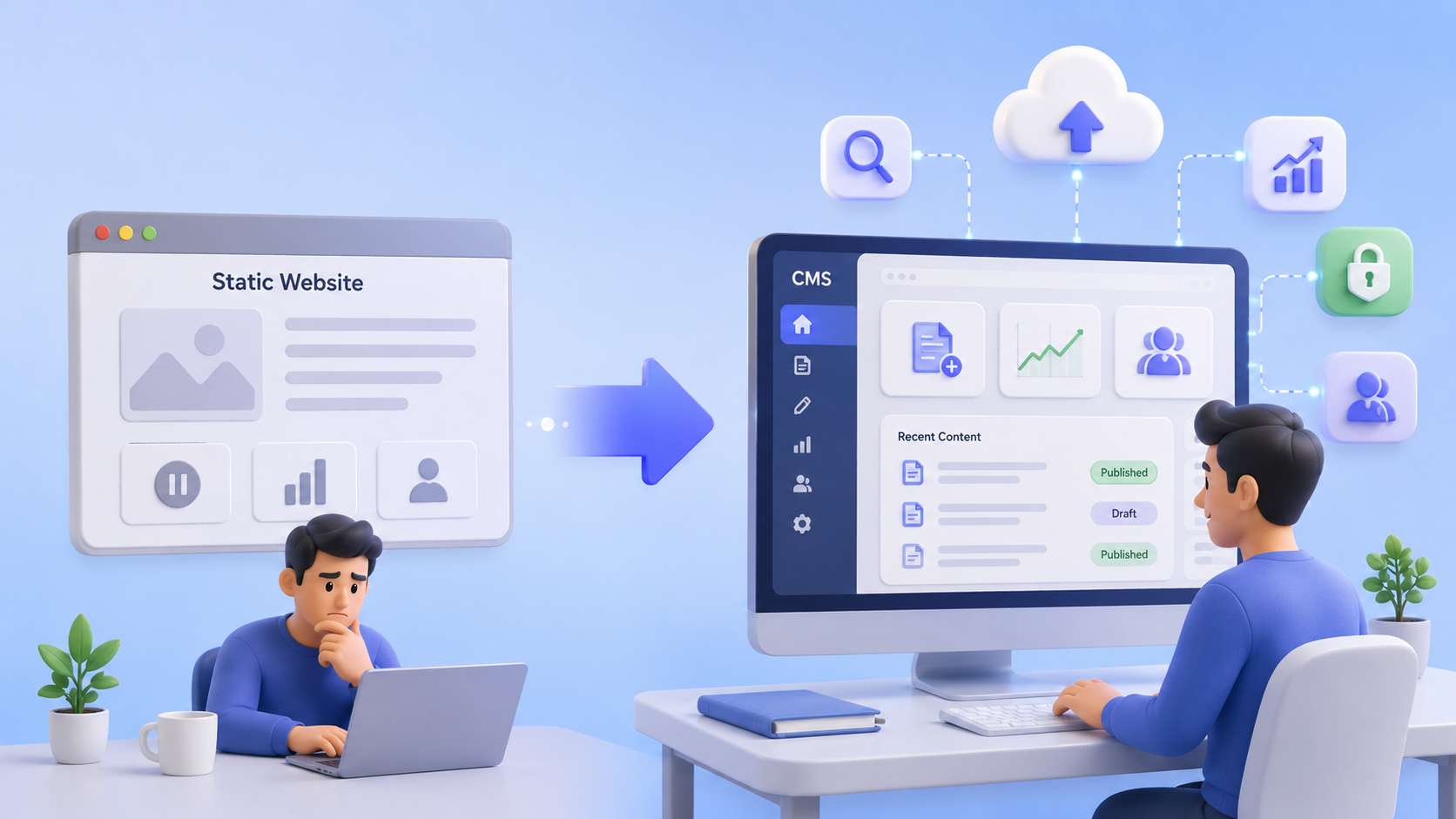
CMS vs Static Website and What Growing Service Businesses Should Choose
Compare CMS vs static websites for growing service businesses. Learn when a simple site is enough, when it limits SEO and leads, and how to choose the right setup for long-term growth.
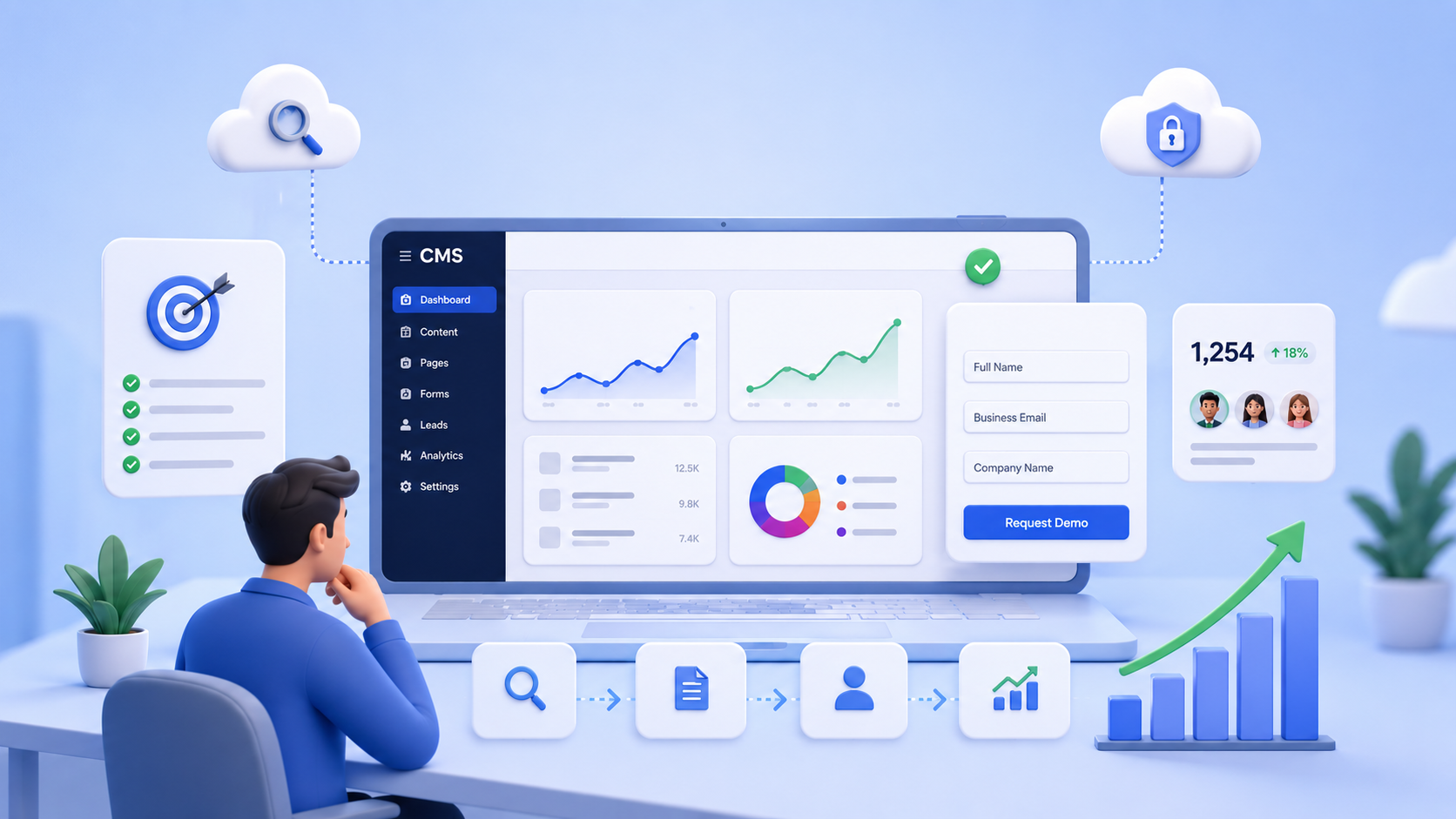
Best CMS for Lead Generation and What Small Businesses Should Look For
Learn how to choose the best CMS for lead generation. Understand SEO impact, content scalability, and how to select the right CMS for small business growth.